Practical guide
When to visit Etna: the best time for a hike
You can climb Etna almost all year round, but every season shows a different volcano. Here is what to expect on the northern slope.
Updated on 23 August 2026
The altitude rule
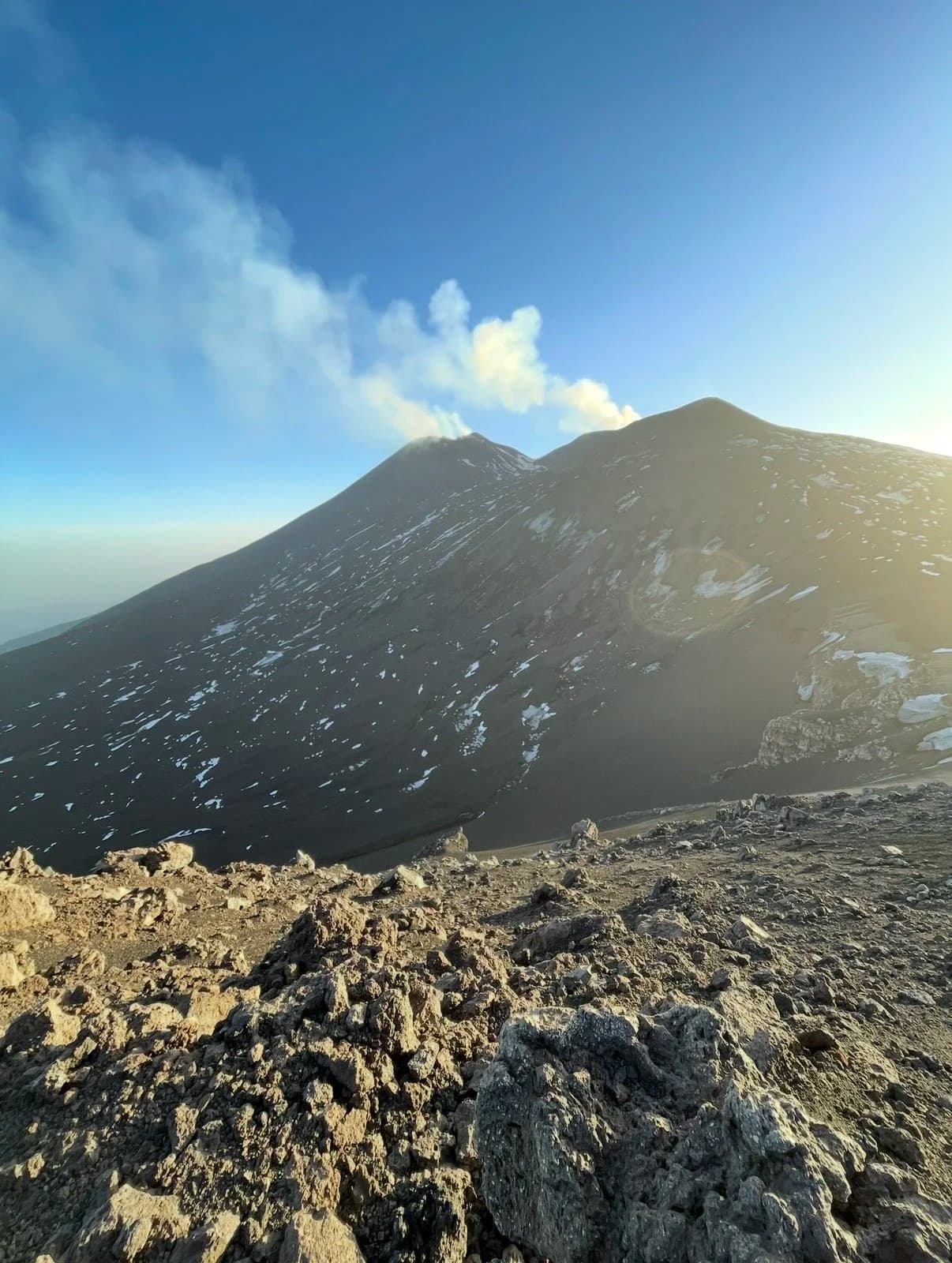
Piano Provenzana sits at 1,800 metres and our tours reach between 2,800 and 3,350. Temperature drops about six degrees for every thousand metres: when Linguaglossa is at 30 °C, the summit is below 15, and the wind can make it feel much colder. Whatever the month, a jacket goes in the backpack.
The second rule is that the volcano decides: eruptive activity, ash and wind can change the route or make the guide choose a different path. That is why every booking is confirmed by us the day before.
Spring (April–June)
Snow lingers above 2,500 metres, often until late May: high-altitude treks resume gradually, while the 2002 craters, between 1,800 and 2,100 metres, are already walkable as the forest turns green again. Days are long, the air is clear and groups are still few. Ideal if you are after quiet and good photographs.
Summer (July–August)
High season: every tour runs, including the 4x4 bus tours up to 2,800 metres. The coastal heat does not reach the high slopes, but the sun is strong: hat, sunscreen and plenty of water. Morning departures avoid the heat of the climb, and the sunset tour is the most requested: low light on the ash and the ride down under the first stars.
- Book a few days ahead: seats on the 4x4 bus are limited.
- Bring a warm layer even in August: after sunset the temperature drops fast.
Autumn (September–October)
Many guides call it the best time of the year: crisp skies, views as far as the Aeolian Islands and Calabria, pleasant temperatures and fewer people. The colours of the birch and larch-pine forest are another good reason to come.
Winter (November–March)
With snow, Piano Provenzana becomes the Etna North ski resort and high-altitude tours stop. Low-altitude outings among the snow-covered 2002 craters remain possible when conditions allow: get in touch to find out what is feasible in the period you have in mind. On clear days the contrast between snow, black lava and sea on the northern slope is a sight few people know.
What about eruptions?
They cannot be scheduled. Lava fountains and flows last days or weeks and can be watched, from a safe distance, when they happen: the guide knows where to take you and where not to go. If glowing lava is your goal, message us: we will tell you honestly what can be seen at that moment.
The tours we mention
 4x4 bus2,800 m
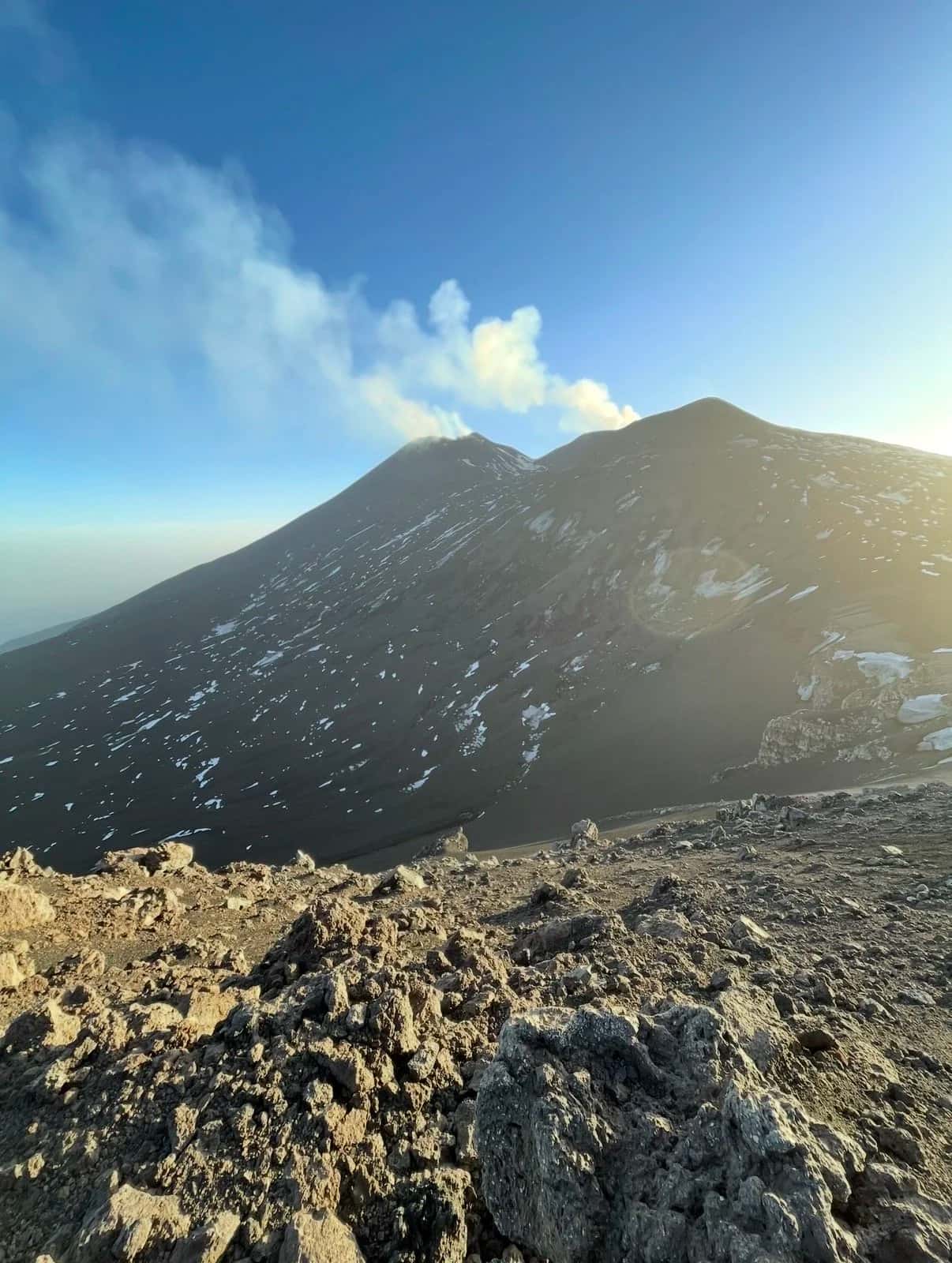
Etna by 4x4 at Sunset
The sun setting over the ash desert, at 2,800 m
A late-afternoon 4x4 bus ride up to 2,800 m, a guided walk in the golden light and sunset at altitude, returning after dark.
- Duration
- ≈ 3 hours
- Difficulty
- Price
- 79 €
 Trekking2,100 m
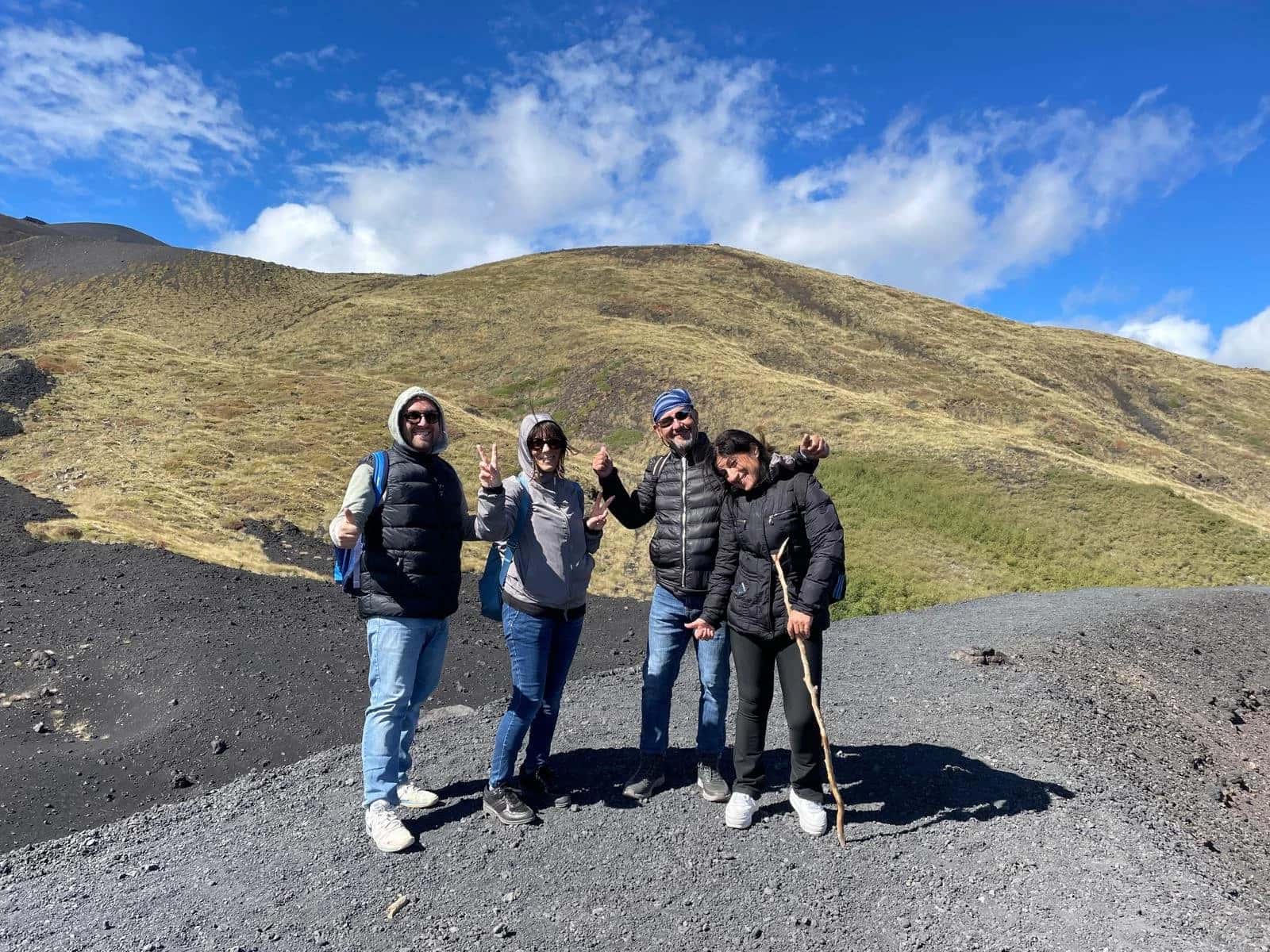
2002 Craters
The craters of Etna North's last great eruption
A 3-hour trek through pine woods, lava flows and the four extinct craters of the 2002 eruption on Etna's northern slope.
- Duration
- ≈ 3 hours
- Difficulty
- Price
- 35 €
 Trekkingapprox. 3,350 m
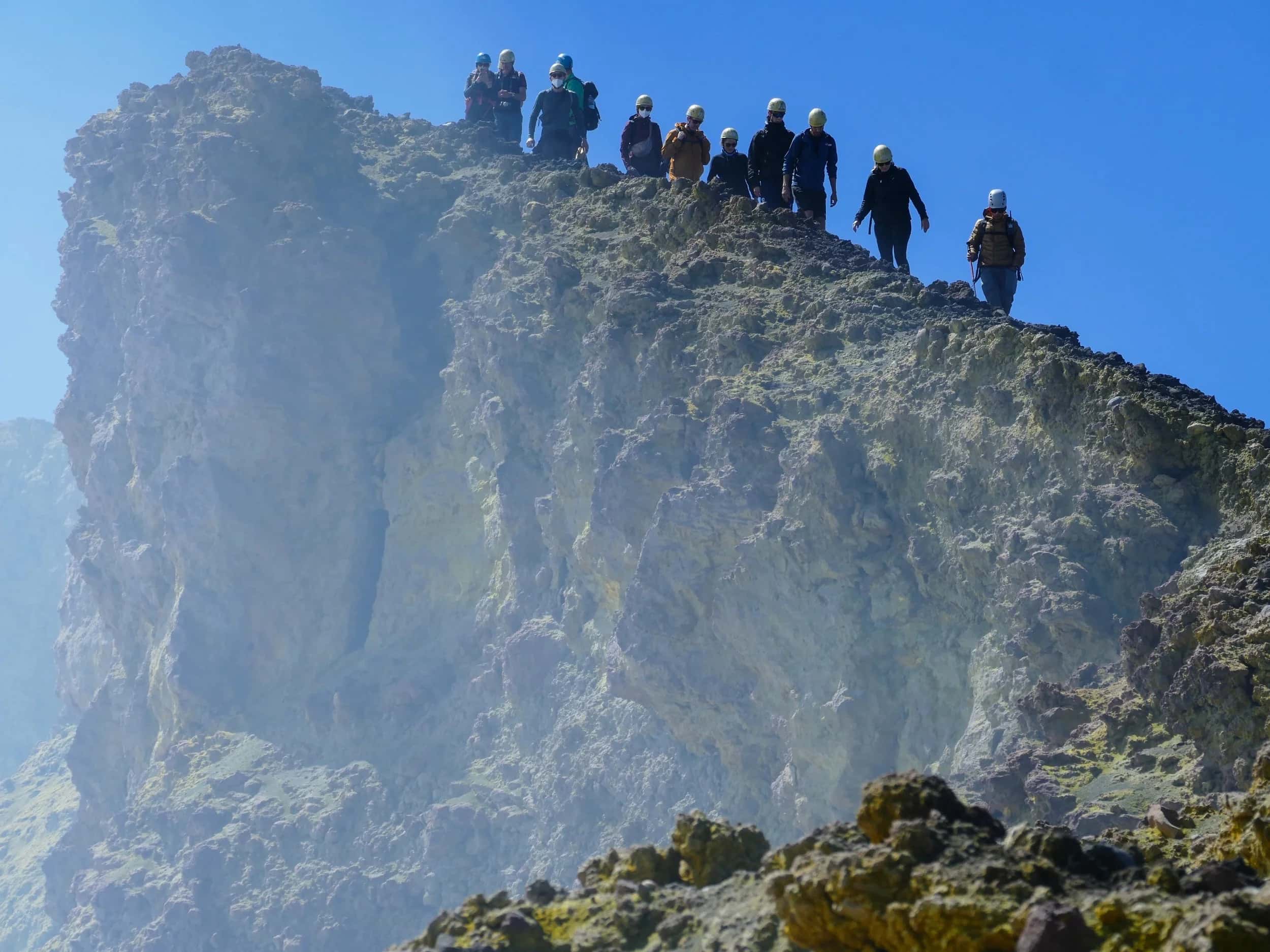
Summit Craters
The top of Europe's highest active volcano
A 4x4 bus ride up to 2,800 m followed by a guided trek towards Etna's summit craters with a certified volcanological guide.
- Duration
- ≈ 5 hours
- Difficulty
- Price
- 120 €