Volcano history
The 2002 craters: the story of the eruption that changed Etna North
On the night of 26–27 October 2002 Etna's north-east flank split open above Piano Provenzana. Within hours lava wiped out the tourist station. The cones born that night are now the destination of one of our favourite hikes.
Updated on 23 August 2026
The night of 26 October
After hours of increasingly frequent tremors, between the evening of 26 October and the early hours of 27 October 2002 two fissure systems opened: one on the south flank, near Torre del Filosofo, and one on the north-east flank along the North-East Rift, between roughly 2,500 and 2,100 metres, right above Piano Provenzana.
The north side was the most violent. From the vents aligned along the fissure came lava fountains, ash columns kilometres high and explosions that could be heard in Linguaglossa. The lava headed downhill through the forest.
Piano Provenzana under the lava
Within a day the flow reached the Piano Provenzana tourist station, then the heart of skiing and hiking on the north side: hotels, restaurants, ski lifts and the road were buried or destroyed. Part of the Ragabo pine forest surrounding the square burned as the lava front passed, stopping a few kilometres above Linguaglossa.
In the same days a sequence of earthquakes hit the volcano's eastern flank: the strongest, on 29 October, damaged Santa Venerina and nearby villages. Ash carried by the wind reached Catania and forced the airport to close several times.
Two months of eruption
Activity on the north side died out in the first days of November, after about a week. The south flank kept going for three months, until the end of January 2003, building new scoria cones and covering the eastern villages in ash. It was one of Etna's most significant eruptions in recent decades, not for the volume of lava but for the damage and the intensity of the explosions.
- 26–27 October 2002: fissures open on the north-east and south flanks.
- Late October: the flow destroys the Piano Provenzana station and part of the pine forest.
- Early November: the north side stops; the south stays active until 28 January 2003.
What you see today
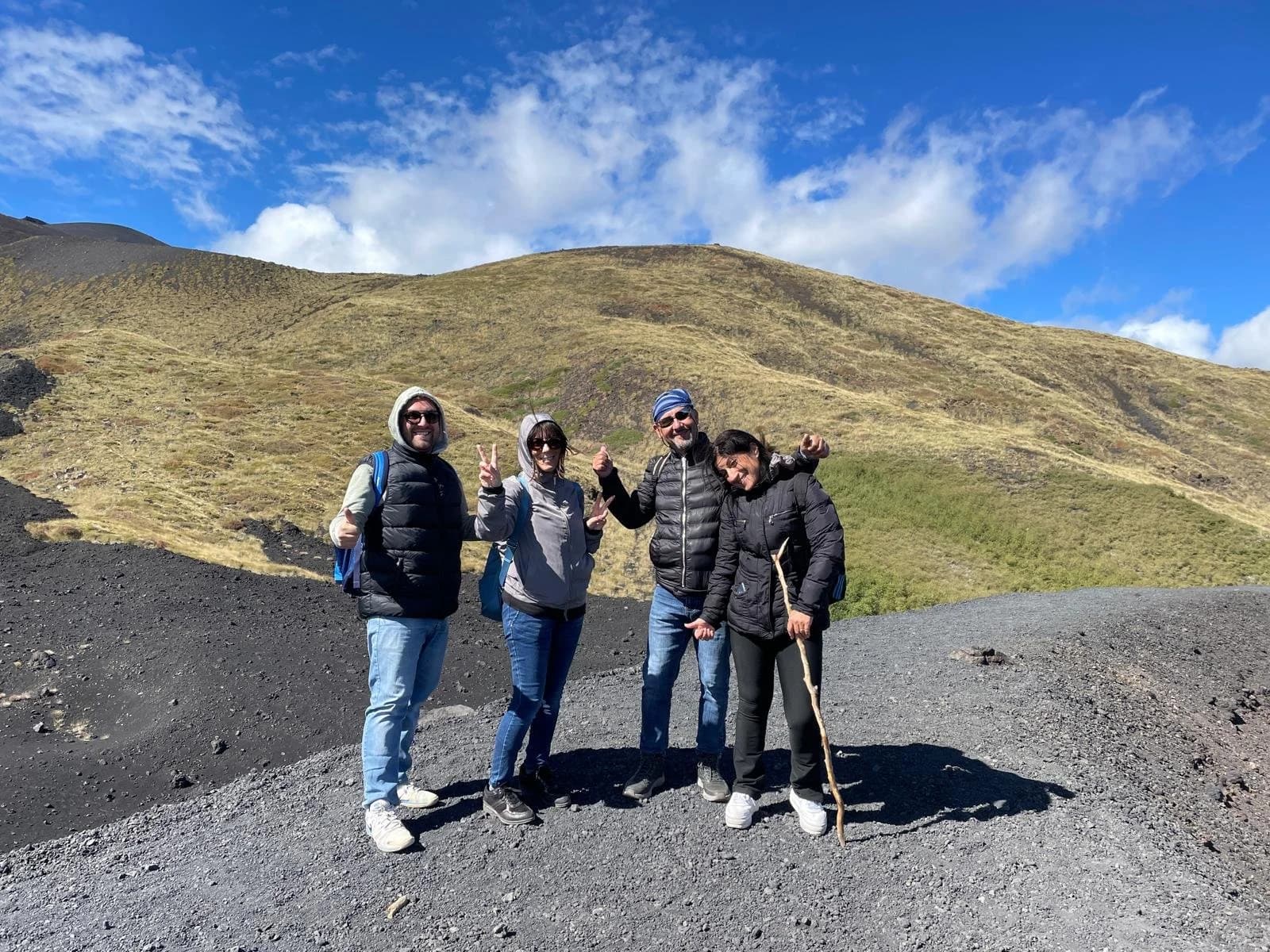
Just over twenty years on, the landscape tells the whole story. Along the fissure stand the 2002 scoria cones, red and black with oxidation, their craters still sharply drawn and, in places, small vents and hornitos. Around them the flow has kept its lava channels and the volcanic bombs thrown out during the explosions.
The strongest mark is on the forest: the trunks of the burnt larch pines still stand like silver skeletons, and among the ash the pioneer plants have returned, Etna broom, sorrel and ragwort, slowly reclaiming the ground. It is an open-air laboratory on how life takes back a landscape after an eruption.
Piano Provenzana was rebuilt in the following years, with the new base of refuges and lifts from which today's tours depart. The 2002 craters walk is an easy hike between 1,800 and 2,100 metres, suitable for families too: the volcano guide reconstructs on the spot the phases of the eruption, the rocks and the return of vegetation.
The tours we mention
 Trekking2,100 m
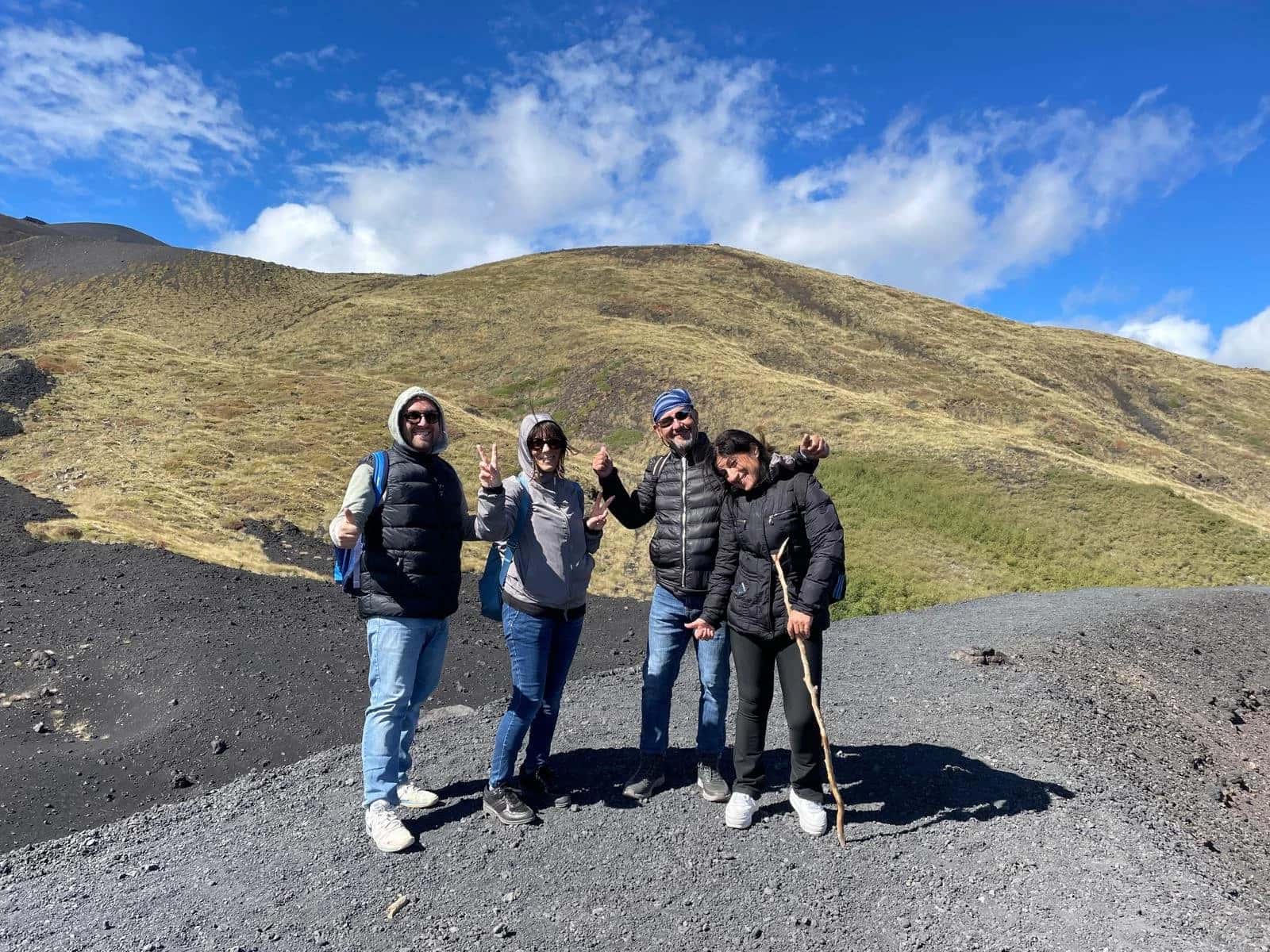
2002 Craters
The craters of Etna North's last great eruption
A 3-hour trek through pine woods, lava flows and the four extinct craters of the 2002 eruption on Etna's northern slope.
- Duration
- ≈ 3 hours
- Difficulty
- Price
- 35 €
 4x4 bus2,800 m
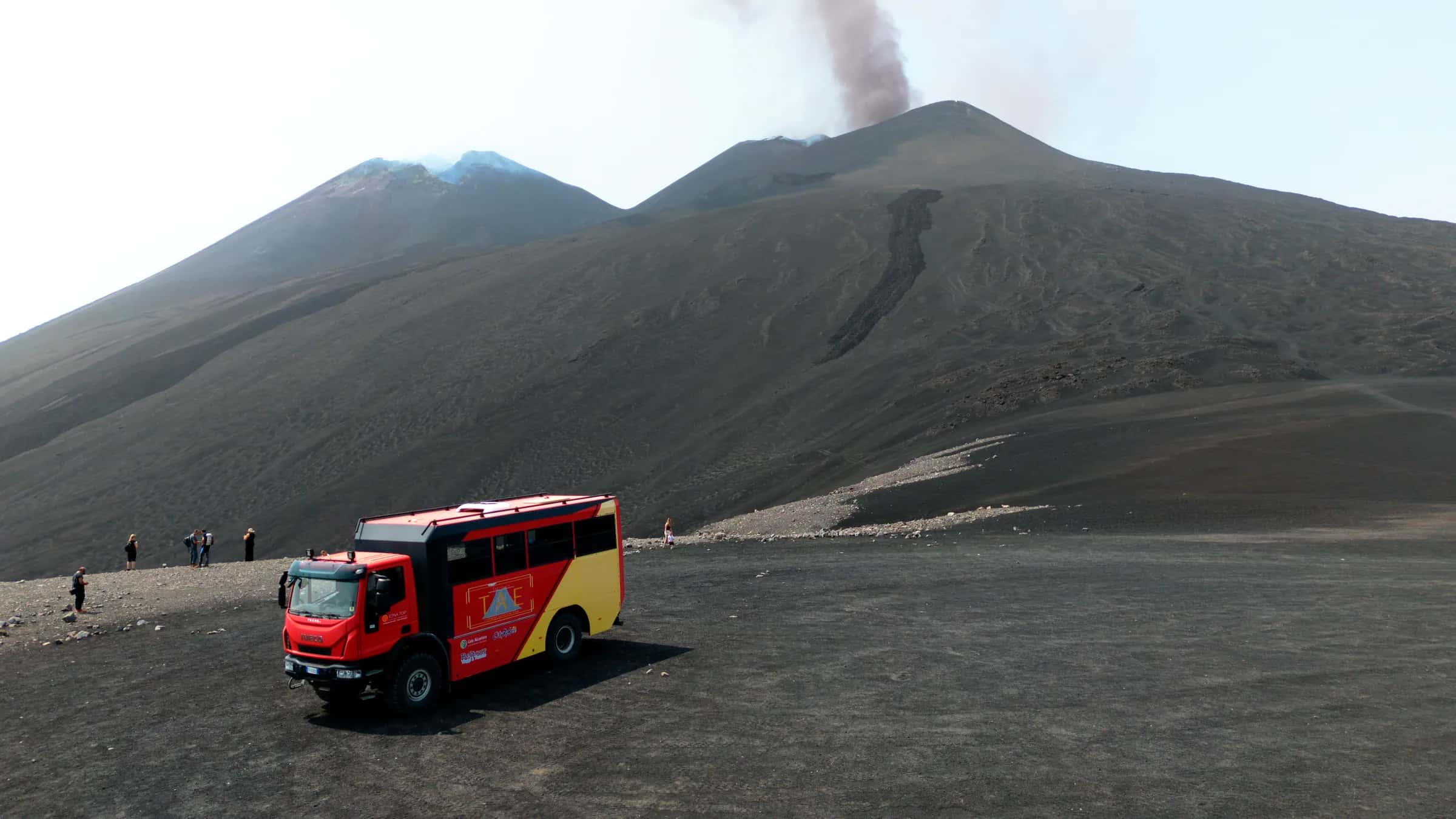
Etna by 4x4
By 4x4 bus up to 2,800 m, with a volcanological guide
Ride the 4x4 bus from Piano Provenzana up to 2,800 m and take a guided walk among craters and fumaroles: Etna's high altitude without a long trek.
- Duration
- ≈ 2.5 hours
- Difficulty
- Price
- 69 €